3 Free Crochet Coaster Patterns for a Cozy Table

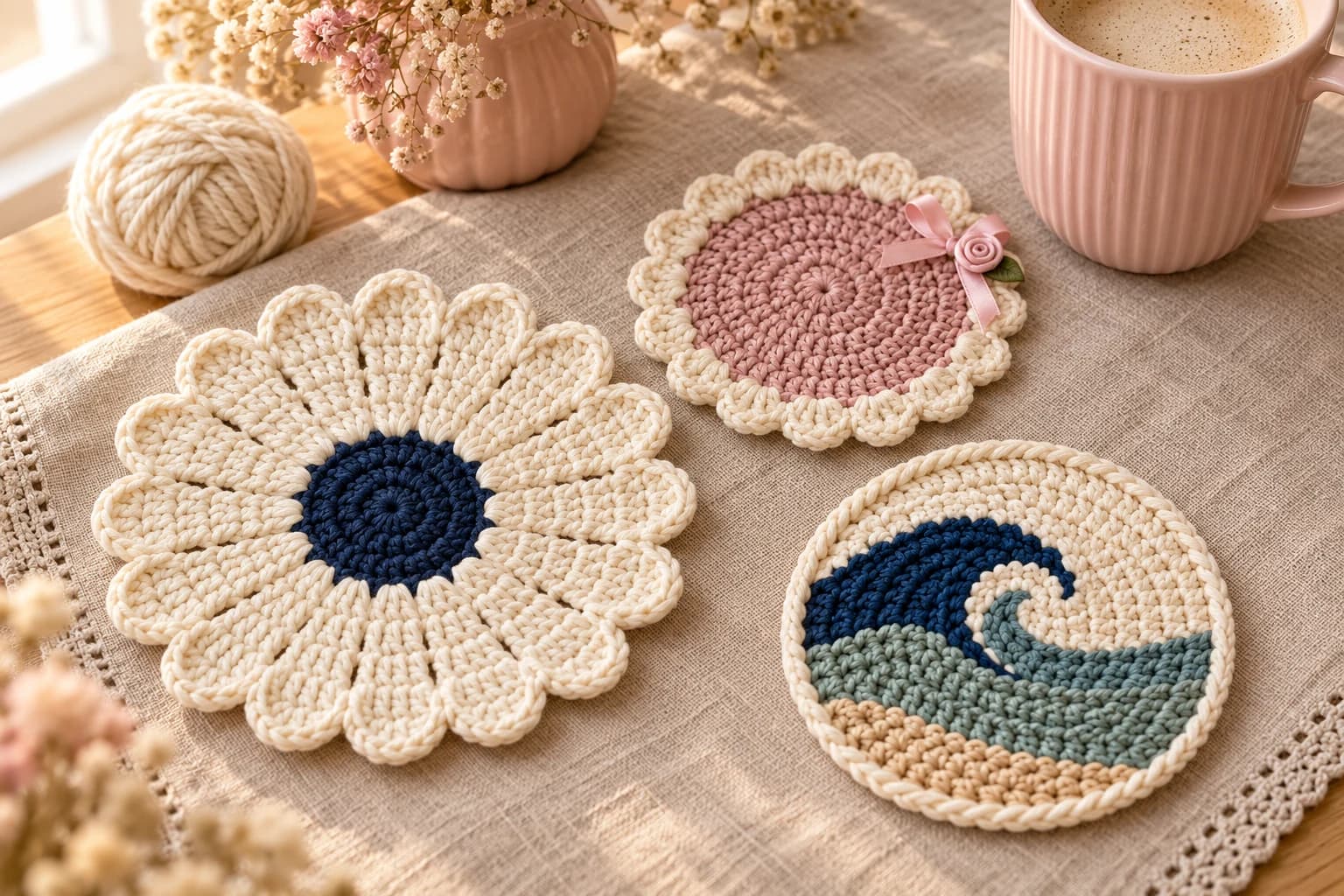
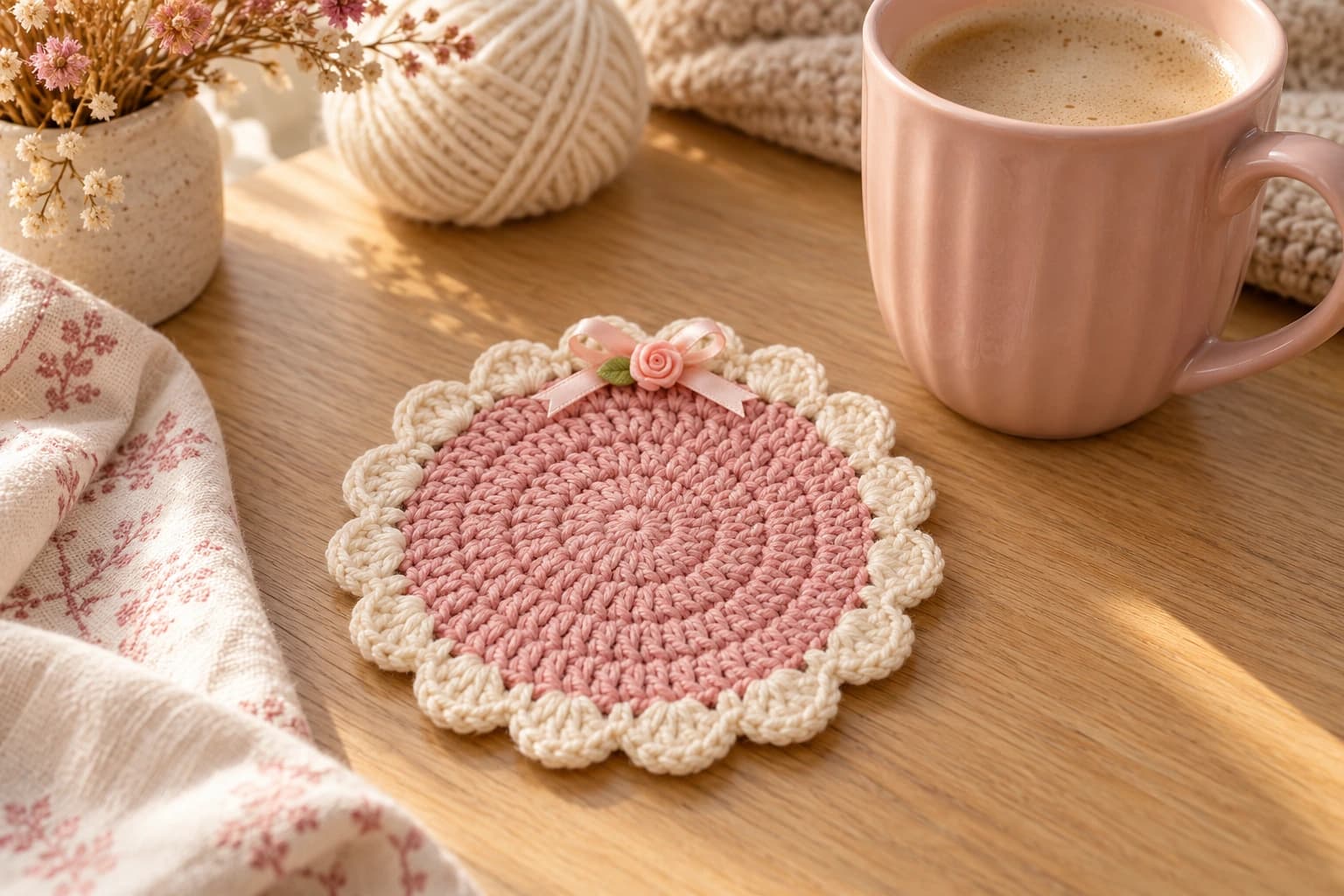
I like a little cotton flower peeking out from under a mug. These 3 free crochet coaster patterns give a table three different moods: navy and cream daisies, pink scallops with a satin bow, and a curling ocean wave. Each selection links to its own full Wavode pattern, with materials and written instructions.
Pick the detail you'd enjoy learning, then choose the colors that belong beside your favorite cup.
Key Takeaways
- Choose the daisy for a flower-shaped coaster with tall fan stitches and reversible color choices.
- Choose the pink coquette coaster for joined rounds, cream shells and a sewn satin detail.
- Choose the ocean wave for single-crochet colorwork in rows.
| At a glance | Yarn | Hook | Main technique |
|---|---|---|---|
| Navy and cream daisy | Worsted #4 cotton | 4.5 mm | Joined rounds, treble and double treble stitches |
| Pink coquette coaster | DK #3 cotton | 3 mm | Double crochet, shell edging and sewn decoration |
| Ocean wave coaster | DK #3 cotton | 3.5 mm | Tapestry single crochet in shaped rows |
1. Daisy Coasters in Navy and Cream
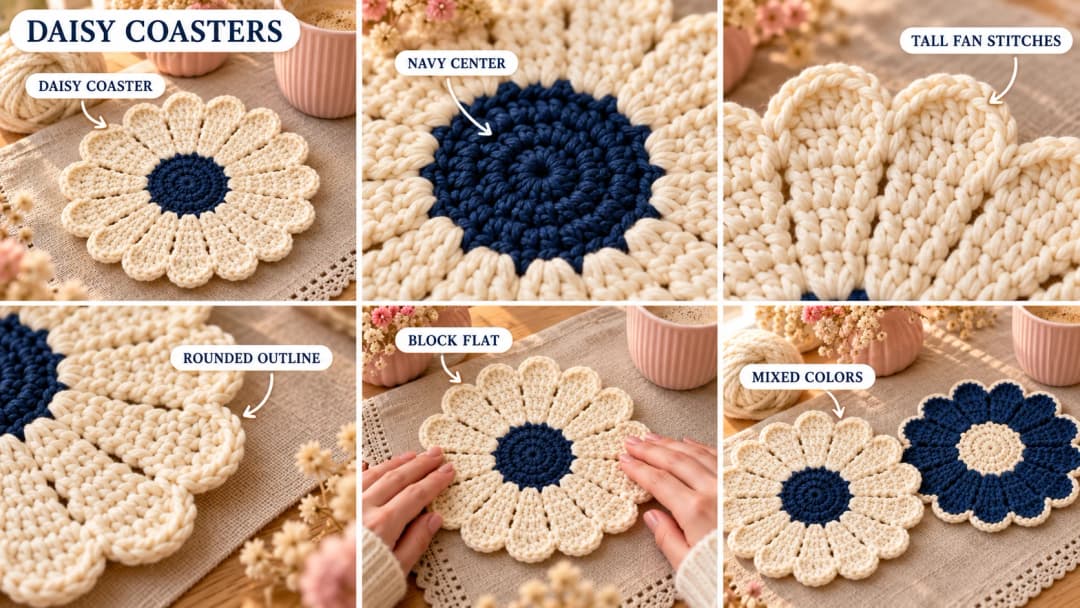
The daisy coaster pattern is my pick for a flower-shaped set you can stack beside the kettle. A contrasting center gives each bloom a crisp outline. The petals grow directly from the center, with treble and double treble stitches spreading into little fans.
I'd keep the navy and cream pairing. Swap the center and petal colors for a mixed stack. The single-crochet outline rounds off each fan, while the tall stitch posts give the petals soft ridges.
What you'll practice: a magic ring, joined rounds, changing colors and wrapping the hook for taller stitches. The full pattern explains double treble, including the extra yarn overs.
Tip. Lay the flower on the table as you work the edging. Ease the fans flat during blocking, then let the cotton dry before stacking your set.
2. A Pink Coquette Coaster with Cream Scallops
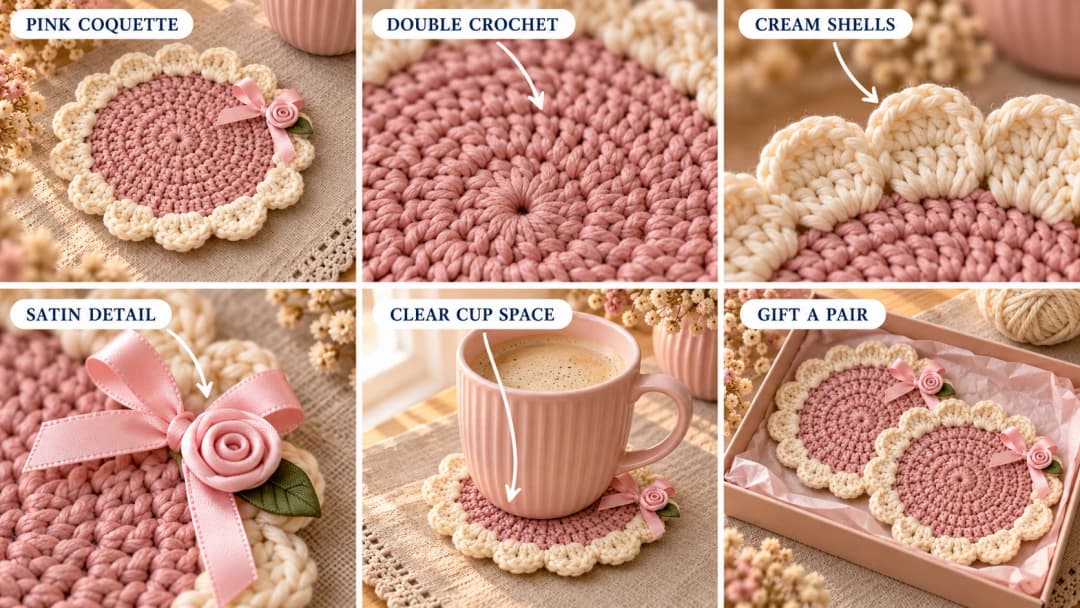
The pink coquette coaster is the one I'd put on a small tea tray. Its double-crochet center has an open, spoke-like texture, framed by cream shell scallops. A narrow satin bow and a purchased ribbon rose sit at the rim, leaving the middle for the cup.
Let the cotton dry after blocking, then pick up your sewing needle. It's easier to smooth the scallops while the rose is still waiting beside you.
What you'll practice: increasing in joined double-crochet rounds, shell edging and sewing a small embellishment securely. Choose this design if you enjoy adding the last little detail.
Tip. Rest your usual cup on the pink center before sewing the bow. Keep its base clear of the ribbon and rose so it sits level. The decorated coaster has small embellishments; keep it away from children under 3.
Hand-wash gently, following the pattern's care instructions. For gifting, I'd pack a decorated pair in a shallow box, with tissue protecting the roses.
3. An Ocean Wave Coaster in Tapestry Crochet
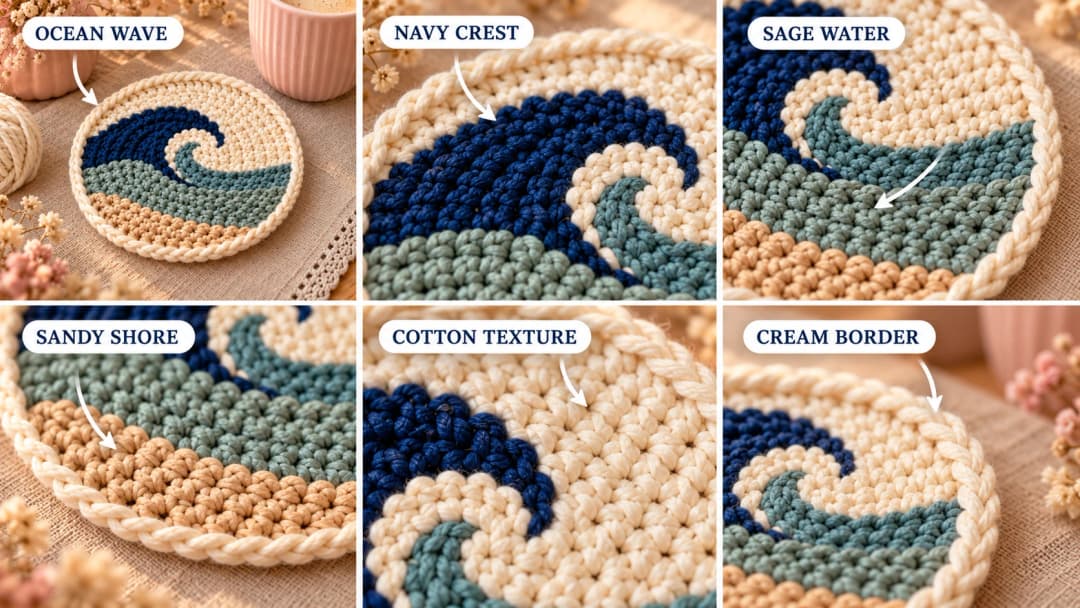
The ocean wave coaster is my choice for a small colorwork project. A navy crest curls over sage water and a sandy shore. The picture is worked in single-crochet rows, with increases and decreases shaping the outside before a cream border finishes the circle.
You'll turn the work between rows, following written color counts. The unused strands travel inside the stitches. Keep them relaxed so the fabric spreads flat.
What you'll practice: tapestry crochet, shaping row ends and carrying yarn. The border introduces reverse single crochet, with an easier option in the full pattern. I'd save the wave for a quiet evening.
Tip. Pause after a colorwork row and gently spread the fabric between your fingers. A carried strand pulled tight can gather the row, even when the stitch count is right.
Which Coaster Would I Make First?
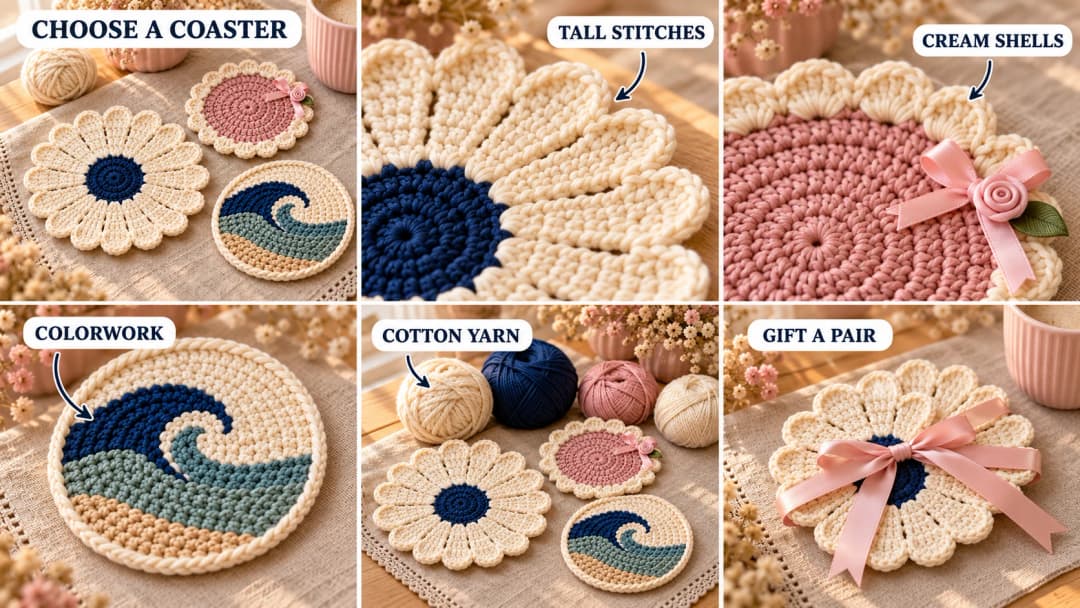
I'd start with the pink coquette coaster if joined double-crochet rounds already feel familiar. Its center is easy to see as it grows, and the cream shells give you a clear repeating edge. For a first attempt at taller stitches, I'd reach for the daisy instead.
Ready for colorwork? Choose the wave. Follow the supplies on its linked page: each design has its own cotton weight and hook.
For a gift, I'd make a matching pair of whichever design suits the person. Let both pieces dry flat before wrapping, and tuck in a small card with the care instructions. A pair of daisies tied with ribbon would be my choice for the kitchen windowsill.
Using UK terms? US sc = UK dc; US dc = UK tr; US tr = UK dtr; US dtr = UK triple treble.
Made a coaster for your tea break? Tag #wavodecrochet on Pinterest so I can see your colors.