Fox Mini Crochet Pattern (Free, Finished in About 2 Hours)

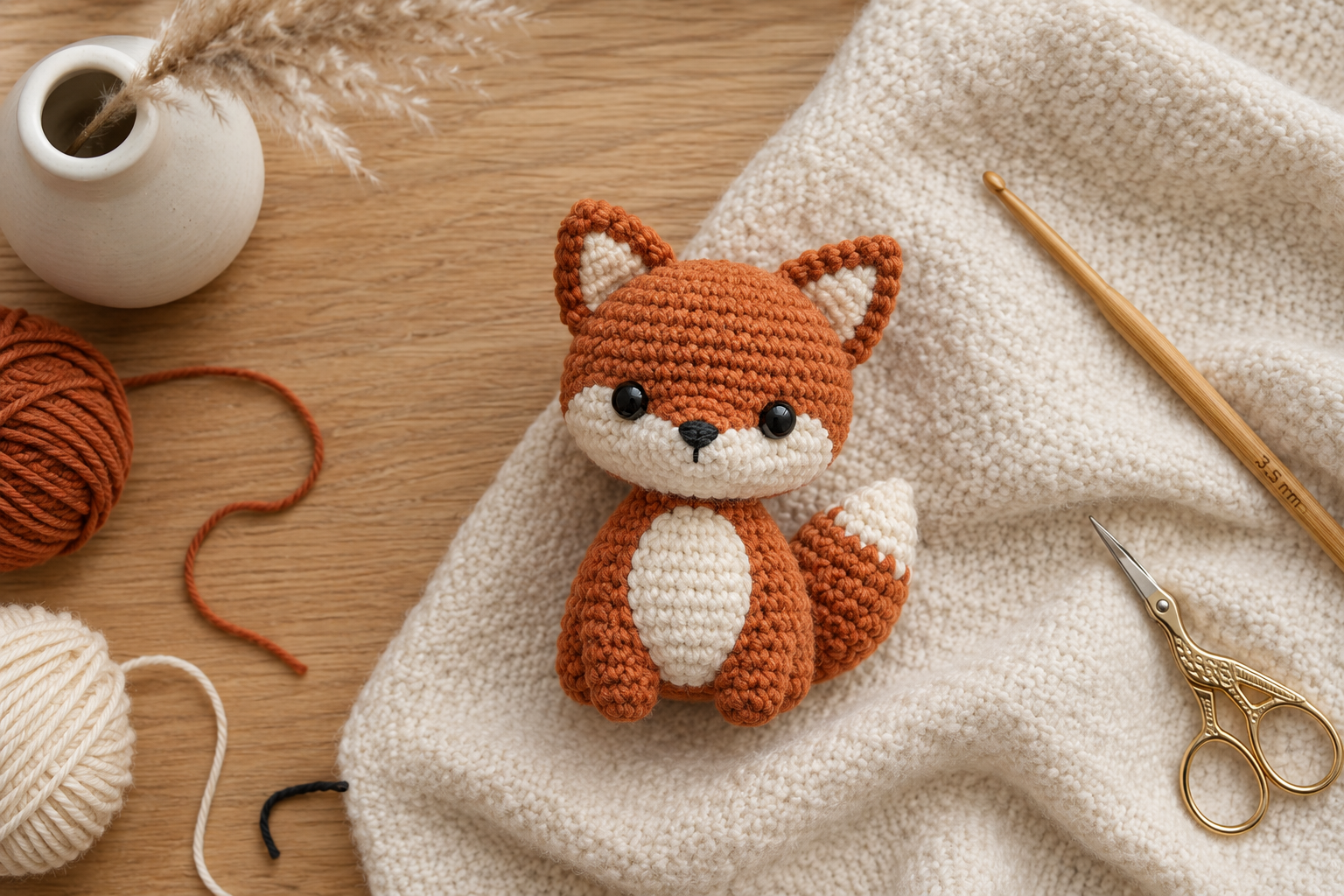
The first fox I ever made sat on my kitchen windowsill for three years before I finally wrote down what I did. This is that pattern — a 3.5-inch (9 cm) mini fox in worsted yarn, worked in the round from the nose down, no sewing seams beyond the ears and tail. Beginner-friendly, US crochet terms, and honestly the fastest amigurumi I keep in my rotation.
Key takeaways
- Finished size: 3.5 in / 9 cm using worsted (#4) yarn and a 3.5 mm hook.
- Time to make: roughly 2 hours once you're comfortable with magic ring and single crochet.
- Skill level: Advanced beginner — you need MR, sc, inc, dec, and basic stuffing.
- Uses US crochet terms. UK conversions listed under "Stitches used".
What size is a mini crochet fox?
Made with worsted-weight (#4) yarn and a 3.5 mm hook, this fox measures 3.5 inches / 9 cm from base to ear tip. Go up to a 4 mm hook and DK yarn if you want a taller 4.5-inch fox for a nursery mobile, or drop to a 2.5 mm hook and sport yarn for a 2.5-inch keychain version. The stitch counts stay identical — only your hook and yarn change the final size.
Materials and tools
| Item | Details |
|---|---|
| Yarn | Worsted #4 in rust orange (~30 g), off-white (~10 g), tiny scrap of black |
| Hook | 3.5 mm (US E/4) |
| Notions | 6 mm safety eyes, polyester fiberfill, tapestry needle, stitch marker |
| Gauge | Not critical — as long as stuffing doesn't show through |
| Difficulty | Advanced beginner |
| Time | ~2 hours |
For yarn, I use Lion Brand Vanna's Choice in Rust and White, but any smooth worsted acrylic or cotton blend works. Avoid fuzzy yarn on a mini this small — stitches disappear.
Stitches used (US → UK)
- MR — magic ring
- ch — chain
- sc (US) = dc (UK) — single crochet
- inc — 2 sc in same stitch
- dec — invisible decrease (through front loops only)
- sl st — slip stitch
- FO — fasten off
If invisible decrease is new to you, the Craft Yarn Council stitch glossary has clean diagrams.
The pattern — head and body (worked as one piece)
Work in continuous spirals. Do not join or turn. Move your stitch marker up each round.
Head
With rust orange:
R1: 6 sc in MR (6) R2: inc x 6 (12) R3: (sc, inc) x 6 (18) R4: (2 sc, inc) x 6 (24) R5–8: sc in each st (24) — 4 rounds Insert safety eyes between R6 and R7, 5 stitches apart. R9: (2 sc, dec) x 6 (18) R10: (sc, dec) x 6 (12) — start stuffing firmly
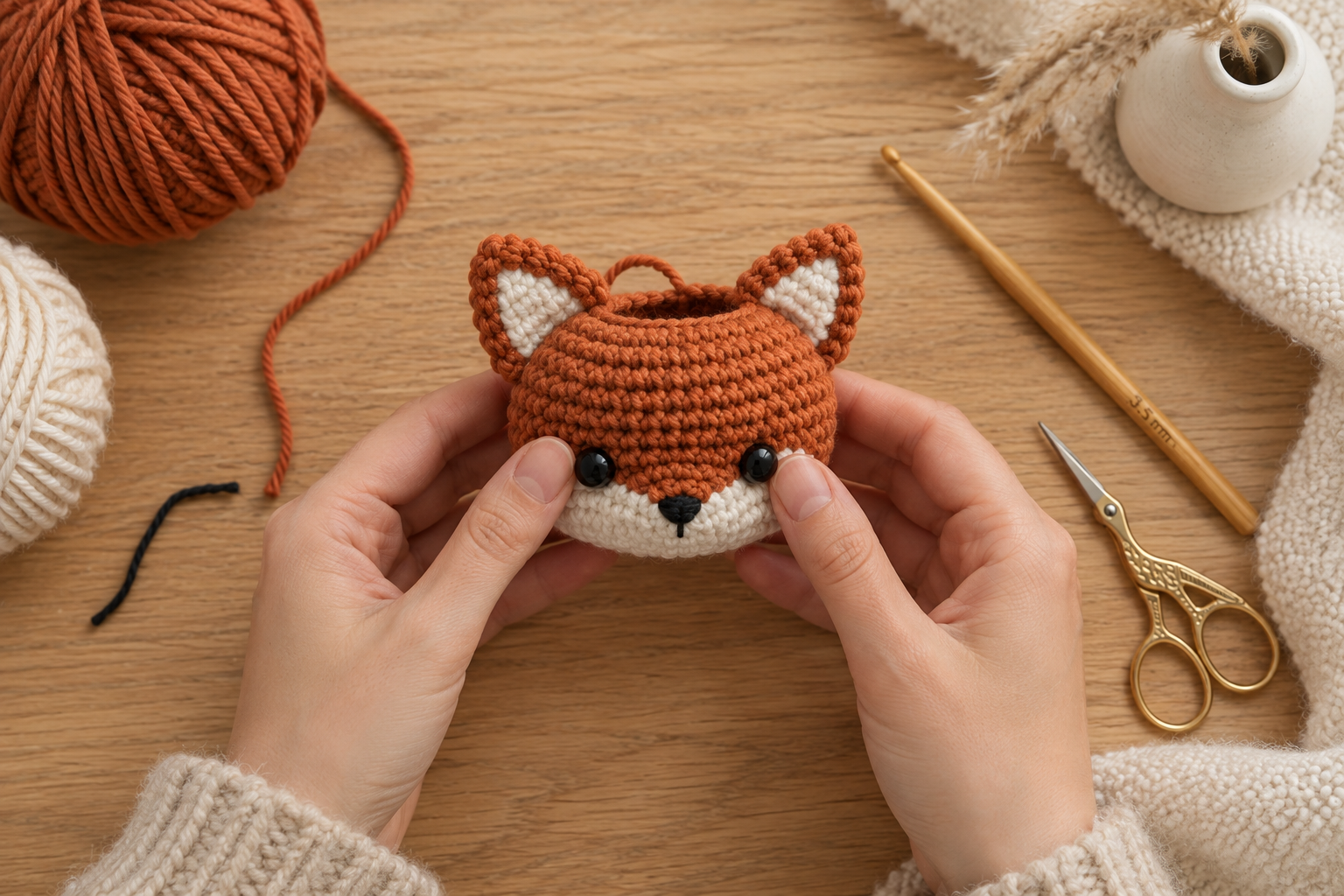
Body
Continue in rust orange from the last round of the head (do not fasten off).
R11: (sc, inc) x 6 (18) R12: (2 sc, inc) x 6 (24) R13–17: sc in each st (24) — 5 rounds R18: (2 sc, dec) x 6 (18) R19: (sc, dec) x 6 (12) — stuff fully R20: dec x 6 (6). FO, weave through remaining stitches, pull tight.
Ears, tail, and belly patch
Ears (make 2, in rust orange)
R1: 4 sc in MR (4) R2: (sc, inc) x 2 (6) R3: sc in each st (6). FO leaving a long tail for sewing. Do not stuff.
Tail (in rust orange, tip in white)
Start with white: R1: 5 sc in MR (5) R2: inc x 5 (10) Switch to rust orange: R3–6: sc in each st (10) — 4 rounds R7: dec x 5 (5). FO. Stuff lightly.
Belly patch (in white)
ch 5. In 2nd ch from hook: sc, sc, sc, 3 sc in last ch. Rotate to work along the opposite side: sc, sc, sc. FO leaving a tail. This gives you a small oval.
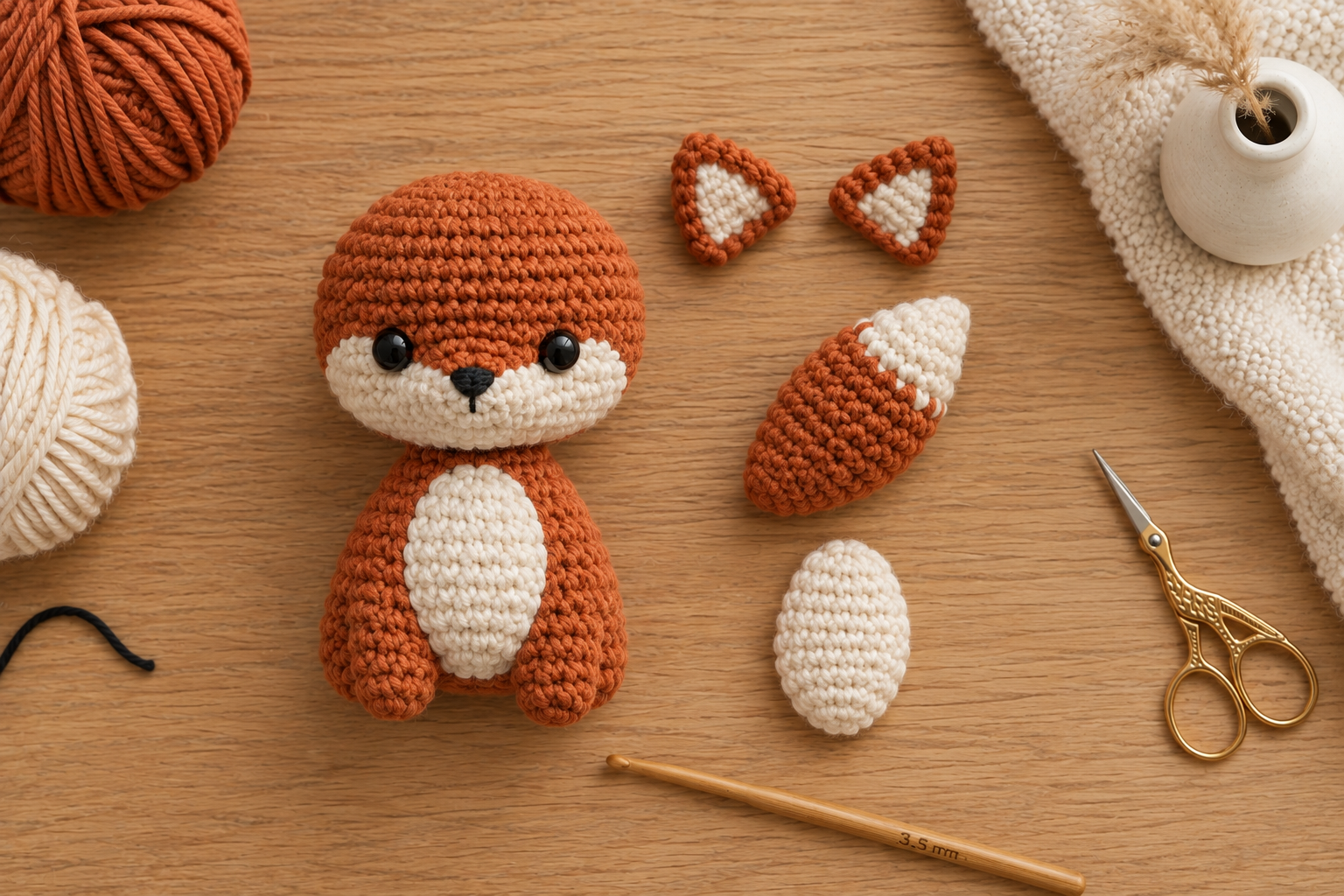
Assembly (the part most tutorials rush)
This is where a fox stops looking like a blob. Take your time.
- Belly: Pin the white oval vertically down the front of the body, starting just below the head. Whipstitch around the edge with the white tail.
- Ears: Pinch each ear flat so it makes a triangle. Sew across the top of the head, 4 stitches apart, tilted slightly forward.
- Tail: Sew the open end of the tail to the lower back, angled up and to one side — a real fox tail curls, mine sits at about 30°.
- Nose and mouth: Embroider a small triangular nose in black between the eyes, then a single vertical stitch down and a tiny V for the mouth.
Troubleshooting: three fixes I wish I'd known
My fox looks lopsided. Nine times out of ten, the ears aren't symmetrical. Count stitches from the center front seam on each side before sewing — don't eyeball it.
The head flops forward. You didn't stuff the neck (R10–R11) tightly enough. That's the pinch point that holds the head upright.
Stuffing shows through. Your gauge is too loose for the yarn. Drop one hook size and remake — it's a two-hour pattern, worth it.
Make it a set
Once you have the fox down, the same base pattern (head + body construction) turns into a bear, a bunny, or a raccoon with tweaks to ears and coloring. And if you want a matching project for the person you're gifting the fox to, my granny square bag crochet pattern uses the same rust and cream palette — the two look beautiful photographed together.
Frequently asked questions
How long does it take to crochet a mini fox?
About 2 hours once you're comfortable with magic ring, single crochet, increases, and invisible decreases. First-timers should budget closer to 3 hours to account for pulling out and restarting the magic ring.
What yarn is best for amigurumi fox patterns?
Smooth worsted-weight (#4) acrylic or cotton is easiest. I use Lion Brand Vanna's Choice or Paintbox Cotton Aran. Avoid fluffy yarns like chenille on pieces this small — the stitch definition disappears and stuffing shows through.
Can I make this fox pattern without safety eyes?
Yes. Embroider two French knots in black yarn where the eyes would go, or sew on small black seed beads. For gifts to children under 3, embroidered eyes are the safer choice.
Is this fox pattern beginner-friendly?
It's an advanced-beginner pattern. You need magic ring, single crochet, increases, decreases, and basic assembly. If you've made one amigurumi ball successfully, you can make this fox.
Can I sell finished foxes made from this pattern?
Yes — you can sell finished items you made from this free pattern at craft fairs or on Etsy. Please don't redistribute or resell the pattern itself. A credit link back to wavode.com is appreciated.
Save this for later
If you make this fox, I'd love to see it — tag @wavode on Pinterest or pin the hero image to your amigurumi board. And next up in this series: a mini bear using the same head-and-body base.